
When greening a roof, you make a decision at the outset that can hardly be corrected later: the installation height. It determines what can grow, how much rainwater the roof can retain, how heavy the structure becomes—and in practice, whether the project is even feasible on existing buildings.
At XROOF®, we offer two cassette heights: 65 and 80 mm. At first glance, this sounds like a marginal difference of a few millimeters. In reality, these are two distinctly different application worlds, each serving different clients, different plants, and different climate effects. This article explains what lies behind the numbers—and why choosing the right height often prevents more headaches than its price difference might suggest.
Why height is more than just a number
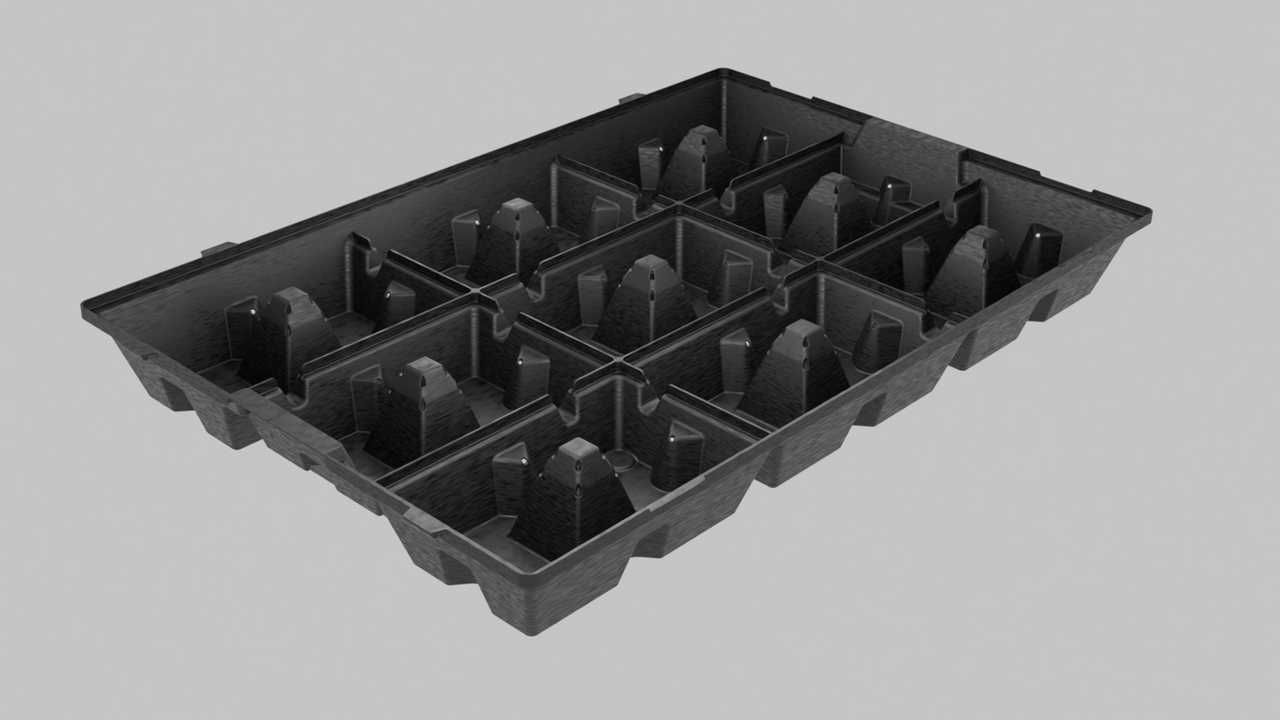
A green roof is always a layered system. Typically, a protective layer, a drainage and retention layer, a filter fleece, the substrate, and the vegetation rest on the roof waterproofing. In conventional installations, these layers are laid individually. XROOF® bundles them into a 60 × 40 cm cassette: water retention, multi-level drainage, substrate space, and planting protection in one component. The cassette height therefore does not correspond to the pure substrate volume, but to the total installation height including retention.
Thus, the height answers four questions simultaneously:
- Which plants will grow? Sedum and mosses manage with just a few centimeters of substrate. Herbs and wildflowers require more root space. The FLL green roof guideline recommends a minimum installation height of around 80 mm for sedum extensive greening. Those who stay below this accept a narrower plant palette; those who build higher gain diversity.
- How much water does the roof retain? Every additional millimeter of installation height means more retention and substrate volume. The roof becomes a functional sponge city component: it relieves the sewage system during heavy rainfall, releases moisture to the atmosphere with a time delay, and cools the neighborhood.
- How heavy does the structure become? Green roof installations are calculated when saturated, meaning fully soaked with water. Higher installations mean more kg/m². In renovations, this often determines whether a green roof is feasible at all without upgrading the load-bearing structure.
- What effect does the roof have on climate and energy? Evaporative cooling, summer thermal insulation, PV synergy, and insect habitat are no longer marginal topics. They scale with installation height.
Two heights, two profiles. Below is what they actually mean in practice.
65 mm—Greening where structural capacity is limited
The 65 mm cassette is the honest answer to a reality every renovation planner knows: many existing roofs were never designed for greening. The load reserve is often in the single-digit kg/m² range, sometimes in the low double digits. Nevertheless, greening is desired because the municipality offers incentives, because the climate concept requires it, or because a client wants to add value to the existing structure without new construction.
The low installation height makes possible what higher systems prohibit. Sedum, succulents, and mosses manage well with the slim substrate space; they are the most frugal plants on the market anyway and designed for dry periods. The multi-level drainage of the XROOF cassette ensures that even with this installation, no waterlogging problem arises—a classic risk of slim installations without decoupled drainage systems.
Three application areas are typical:
- Existing and renovation projects with limited load reserve, where retrofitting is required without structural upgrading.
- Pitched roofs, where dead load and slope forces must be deliberately kept low.
- Small outbuildings such as carports, garden sheds, garage extensions, waste or bicycle shelters. Structures that were never designed for more.
What the client receives is a living, low-maintenance sedum roof with clear climate impact, without the need to recalculate the load-bearing structure. For many municipal funding programs, however, 65 mm is insufficient; those seeking funding should verify in advance whether the minimum installation height is met.
80 mm—The industry standard, and for good reason
80 mm is the height that has become established in German and European green roof practice. The FLL green roof guideline cites this value as the minimum recommendation for sedum-based extensive greening. Funding programs, municipal green roof registers, and incentive systems often orient themselves to this threshold: only from 80 mm onward is the roof considered a “fundable green roof” in many regions.
With this height also comes true plant diversity in the extensive range. An 80 mm cassette supports the classic sedum-herb mixture, robust, low-maintenance, and stable over years. The water retention volume is sufficient to bridge dry periods of two to three weeks without the vegetation visibly declining.
For many clients, 80 mm is the economical standard solution: load, substrate requirement, and plant diversity are in balanced proportion, and installation in the 60 × 40 cm cassette proceeds without special tools—a point especially appreciated by installers, as it makes crew size and daily output calculable.
The 80 mm variant is also the basis for the more demanding configurations in the XROOF system: with the RETENT inlay, it becomes a true retention roof with maximum water retention. In the BIOTOP variant, it supports a biodiverse planting mixture of sedum, herbs, and wildflowers, transforming the roof into an insect habitat.
An important synergy makes the 80 mm particularly attractive: photovoltaics. A green roof surface cools through evaporation, which measurably increases the efficiency of mounted PV modules during hot summers. The 80 mm height is the proven standard here, as it provides sufficient substrate and water volume without exceeding the installation height of the module supports or complicating maintenance access between module rows.
Those who simply want to “build a green roof” and do not need to meet special requirements are usually right with 80 mm.
What 65 and 80 have in common: Water retention, PV, Sponge City
Two heights, but several themes run across both.
The integrated water retention. It works at every height and ensures that plants survive dry periods without the need to install separate irrigation. Its volume scales with height: the deeper the cassette, the more reserve. The multi-level drainage simultaneously prevents the retention from becoming waterlogged—a point where slim installations without multi-level systems often fail. The patent-pending RETENT inlay of the 80 mm cassette additionally reduces substrate requirement and total weight without reducing water retention.
The PV synergy. It is noticeable at both heights, but particularly worthwhile with the 80 mm. Solar modules on a green roof operate more efficiently because the roof’s evaporation lowers module temperature. Studies from the DACH region show efficiency gains in the single-digit percentage range. For a 25-year investment like PV, this is measurably relevant, and with larger installations, it quickly becomes the economic advantage that supports the additional cost of greening.
The sponge city effect. It becomes a real argument starting at 80 mm. Municipalities increasingly recognize green roofs as components in precipitation and heavy rainfall concepts; ESG reporting frameworks require quantifiable contributions to climate adaptation. The 80 mm height here is not comfort, but a prerequisite for eligibility, especially in combination with the RETENT inlay.
An Outlook: 100 and 120 mm in preparation
For projects with higher demands on plant diversity, water retention, and climate impact, we are already working on two additional installation heights: 100 and 120 mm. These extensions will enable the transition to semi-intensive greening, with perennials, wildflowers, and herb lawns as the planting basis and significantly higher water retention capacity for sponge city concepts and ESG reporting. As soon as these cassettes are available, we will inform you here and through our newsletter.
How do you choose the right height?
In consultation, the decision ultimately comes down to three questions:
- What can the roof support? If structural capacity is limited, the 65 mm is the right choice. If sufficient load reserve exists, the 80 mm is the proven standard. Before any determination, a structural verification of the saturated installation load should be available.
- What should the roof accomplish? If it concerns fulfilling a mandatory or funding requirement, 80 mm is usually the right choice. If maximum water retention or biodiversity becomes important, the RETENT or BIOTOP variant of the 80 mm is worth considering.
- What maintenance effort suits the project? Sedum roofs are low-maintenance at both heights. One inspection per year including fertilization is generally sufficient. Biodiverse installations with herbs and wildflowers require one to two maintenance visits per year, which in most cases is not an obstacle, but should be communicated early in client expectations.
CONVERTA provides consultation on this choice based on over three decades of experience in material management, recycling technology, and plastic system development. The XROOF cassettes are manufactured in Germany from up to 100 percent secondary material, so each cassette is not only a component for a living roof, but a concrete step out of the cycle.
Conclusion: Two heights, clear decision logic
Those planning a green roof should not decide the installation height last, but first.
- 65 mm when the load-bearing structure offers little and sedum is sufficient.
- 80 mm as the standard that meets the FLL minimum recommendation, ensures funding eligibility, and in the RETENT and BIOTOP variants handles the most demanding tasks.
A cassette is ultimately only as good as the consultation beforehand and the material within. You receive both from CONVERTA under one roof.